
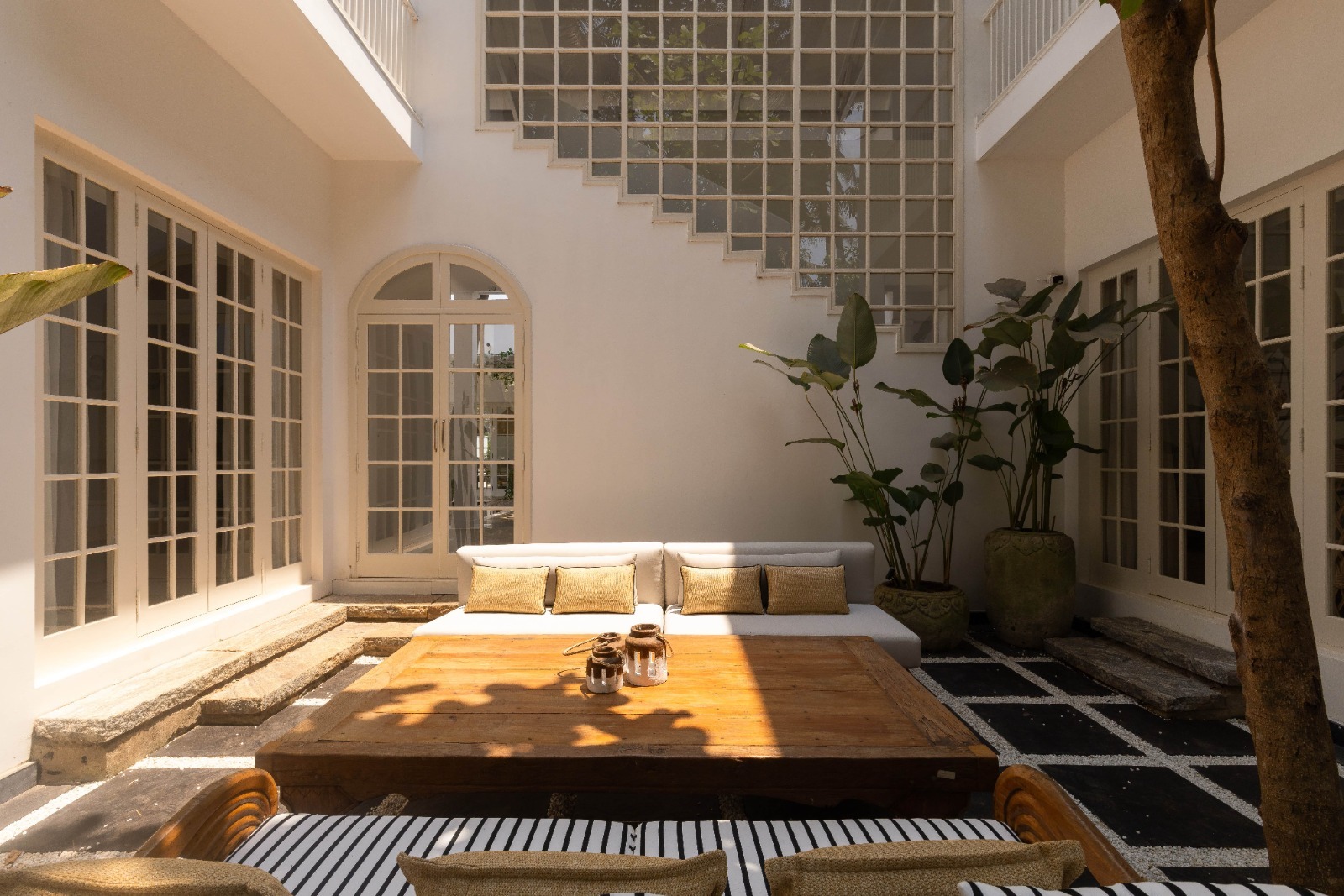
Conversation pits are a cool design idea from the 1950s that is making a big comeback today. Conversation pits have always been more than a design statement—they were created to encourage people to slow down, gather and interact. They became iconic in the 1960s and 70s, when homes started embracing open plans and informal living.

A Place for Conversation and Connection
A conversation pit naturally creates a sense of enclosure without adding walls. It subtly defines a gathering space while maintaining visual continuity. A conversation pit creates a memorable moment within the house—it becomes the space where family members gather after dinner, friends spend hours talking, or children lounge comfortably. It is the perfect cozy spot for family and friends to sit, look at each other, and talk without any distractions. It brings the spirit of traditional gathering spaces indoors, creating a defined yet open setting where people naturally come together. There is also a growing appreciation for architecture that has character. By dropping the couch into the floor, it makes the room feel open and keep the furniture from blocking the view. A lowered seating area subtly changes the character of a room. Without building walls, it creates a sense of intimacy and signals that this is a place to slow down, engage, and connect.

Key Considerations
A successful conversation pit balances functionality with warmth and comfort. The seating should invite people to spend time there, with well-designed cushions, supportive back rests, and proportions that allow for relaxed conversations. Equally important is creating a focal point. This could be a coffee table, a fireplace where climate permits, an indoor tree, an art installation, or simply a view towards a garden or courtyard. The idea is to give people something to gather around. An important aspect is the seating arrangement. Everyone should feel equally included, so curved layouts or wraparound seating often work better than straight lines. Finally, the surrounding architecture should frame the pit rather than overpower it. The transition between levels should feel effortless and safe.

Rich natural materials such as wood, stone and textured fabrics add warmth and depth. The flooring within the pit can also be subtly differentiated to reinforce the sense of place. Accessories should remain understated. Natural, layered textures, comfortable upholstery, thoughtful acoustics, artwork, books and sculptural lighting can add personality without making the space feel cluttered. Rather than standing apart from the rest of the home, the conversation pit should integrate seamlessly into the larger living experience.

Trends

Natural stones like travertine, textured limestone, oak and marble are being paired with warm timber finishes and tactile fabrics such as boucle, linen and suede. These combinations create spaces that feel luxurious yet approachable. Handcrafted fabrics are replacing glossy materials Colour palettes are largely inspired by nature, think warm beiges, taupes, earthy browns, muted greens and soft terracotta tones. These colours help create a calming environment where people naturally want to spend time. Shades like clay, moss green, caramel, sand and charcoal creating warmth without feeling heavy. Lighting has become much more layered. Instead of relying on a central chandelier, designers are combining concealed LED lighting, wall lights, floor lamps and decorative pendants to create a soft, intimate ambience. Dimmable lighting is particularly important because the mood of the space changes throughout the day.
Read more about conversation pits in my article in The Hindu.
