
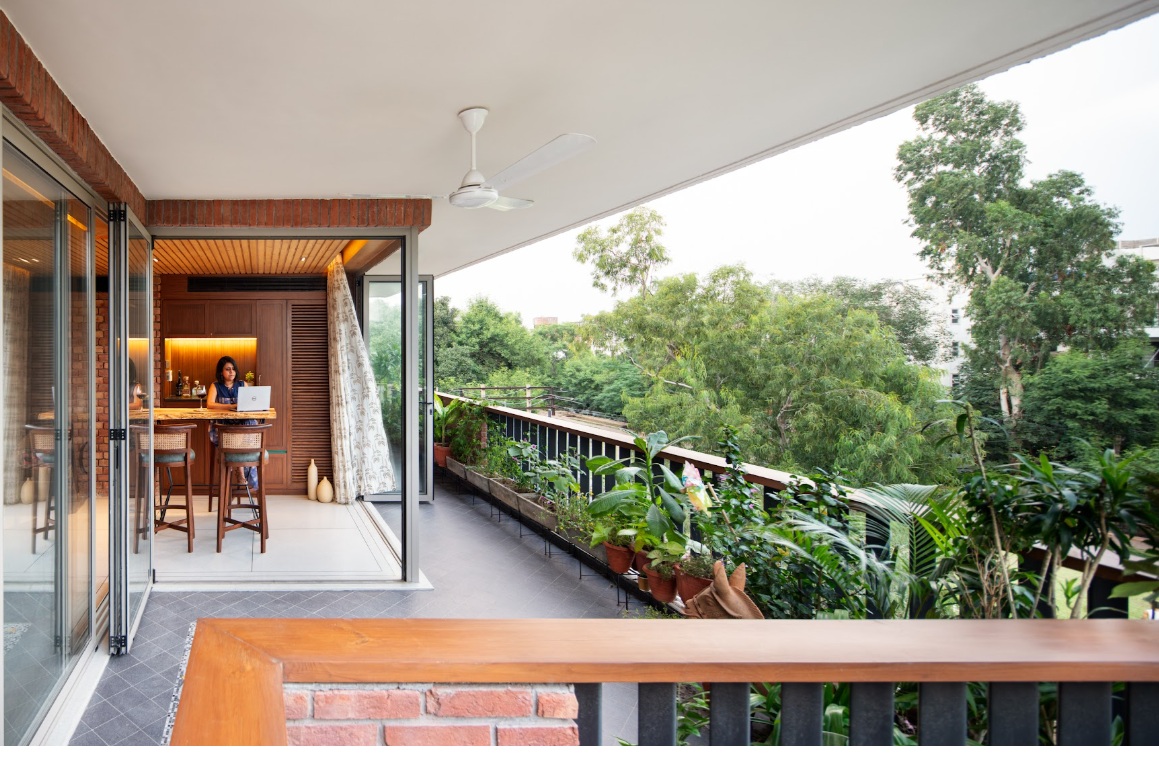
Balconies and patios were traditionally treated as secondary spaces within a home, used only occasionally or designed solely to bring in light and ventilation. But in the current times especially after the pandemic, our relationship with these spaces has changed quite significantly. For many people living in high-rises or dense urban environments, they have become an important connection to openness, light, air, and nature. These spaces have become a bridge between the indoors and outdoors, an active extension of living rather than just an attached outdoor space. Increasingly, people want them to support their everyday lives, whether that means having their morning coffee there, reading, working for a few hours, entertaining, or simply stepping outside for a moment. Balconies today have evolved beyond functional outdoor zones into immersive lifestyle extensions of the home. Through material continuity, layered planting, framed views, and indoor-inspired furniture, they are designed to support everyday rituals such as relaxing, working, reading, or entertaining. Seamless indoor-outdoor transitions further blur boundaries, transforming balconies into emotionally connected, lived-in spaces rather than secondary add-ons. So, here are five trends in balcony design to watch out for

Multi Functional Spaces
One of the strongest trends is the shift towards spaces that feel more natural and less decorative. Homeowners want balconies that support daily routines instead of just looking nice. Whether it’s a spot for morning coffee, a workspace, a reading nook, or an entertaining area, people want these spaces to be used throughout the day. There is also growing interest in making these spaces highly personal. Some homeowners turn their balconies into art studios, music corners, or outdoor libraries.

Seamless indoor-outdoor transitions
We are also seeing more focus on indoor-outdoor continuity. Large sliding doors, folding glazing systems, tile continuity and smart material choices make it a seamless extension of the living room. Maintaining continuity with the interiors through similar materials and tones also helps the balcony feel larger and more connected.

Minimalist Vibe
There is a strong shift towards minimalist, multifunctional, and nature-led balcony designs. Home owners are leaning towards earthy aesthetics, sustainable materials, built-in seating, foldable furniture, vertical storage, and lighter colour palettes to visually open up the space. Clean layouts, comfortable furniture, muted tones, and layered textures create a calming atmosphere. What makes these spaces unique is the emotional quality they bring into everyday living.

Greenery
Plants and vertical gardens play a huge role in creating softer, healthier, and more immersive outdoor spaces. Beyond aesthetics, they improve air quality, reduce heat, and bring a sense of calm into urban homes. Vertical gardens especially work beautifully in compact balconies because they maximise greenery without occupying floor space. Edible gardens, layered planting, and climate-friendly landscaping are gaining popularity as people look for healthier, more sustainable lifestyles.

Lighting, Materials, Colours and More
Warm ambient lighting, wall sconces, lanterns, and subtle concealed lighting are trending because they create a tranquil ambience. In terms of furniture, modular seating, built-in benches, and weather-friendly natural materials like wood, cane, rattan and wicker are very popular. Earthy colour palettes like terracotta, warm greys, muted greens, sand, and off-whites, layered with tactile textures like stone, wood, linen, and concrete finishes are popular.
Click here and here to read other similar posts.

big balcony with sand colour rough tiles flooring with lots of plants and nice swing, glass of hot filter coffee and spicy snacks will be like a mini heaven !!!!!
Really, you are absolutely right! Thanks for reading:)