
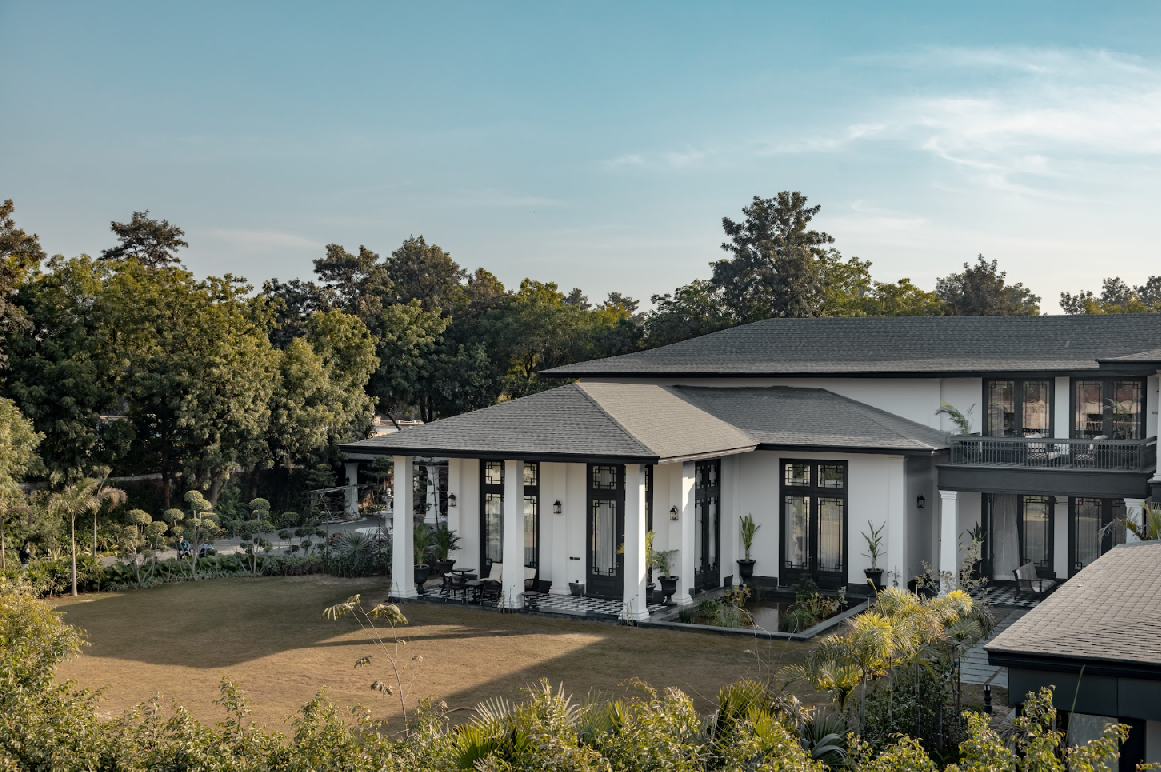
There is no denying that global warming and rising temperatures have a direct influence on the way homes are being built today. The era of the sealed box—where buildings are treated as hermetically sealed environments reliant entirely on HVAC systems—is slowly coming to an end. Rather than responding passively to environmental conditions, architects are now required to actively anticipate thermal stress. In this effect, the building envelope becomes the primary thermal regulator. Rising temperatures are fundamentally shifting architectural priorities; passive cooling, climate-responsive layouts, and heat mitigation are now central design considerations rather than afterthoughts.

There is a renewed focus on passive cooling strategies, orientation, and thermal comfort. From natural and breathable materials to wall finishes and interior fabric selection, climate change has a direct impact on how homes are being built. What is also changing is the idea of comfort. Earlier, comfort was often equated with controlled indoor environments, but now it is being redefined as a more balanced condition where indoor spaces remain stable without excessive energy use.

Traditional Wisdom Reimagined


Architects are increasingly synthesising traditional spatial wisdom with contemporary materials and technology. Time-tested planning strategies such as courtyard typologies, precise building orientation to harness prevailing winds, and deep-set openings to limit direct solar exposure are being reinterpreted using high-performance materials like double-glazed low-E glass, aerogel insulation panels, and cool roof coatings with high solar reflectance. There is a renewed emphasis on building orientation, shaded pathways, spatial sequencing, and landscape integration that allows heat to dissipate rather than accumulate. Instead of treating climate as a problem to be corrected, design is increasingly using it as a framework that allows the natural elements to shape how spaces open and connect. This results in adaptive homes where the users experience comfort as a continuous, almost imperceptible transition.

Courtyards act as thermal regulators; the enclosed open space draws hot air upward through the stack effect, pulling cooler air from the ground level through the surrounding rooms. They are increasingly used with jaalis, chajjas, and verandas to create a cool layered microclimate within the home. Thus, architects today are rediscovering and recalibrating these systems to contemporary scales and living patterns, making them relevant to modern residential typologies without diminishing their climatic effectiveness.
Integrating Modern Systems
While traditional passive strategies remain foundational, there is a growing integration of discrete systems that enhance their performance. Water elements, for instance, can be part of recycled loops that sustain cooling without excess consumption. Similarly, subtle interventions such as controlled airflow systems or moisture-based cooling are sometimes used as reinforcement. Their intent is to support passive design, ensuring that comfort is sustained even as climatic conditions become more extreme.
While advanced systems like misting devices or recycled water loops are increasingly being explored, their integration often depends on the scale and intent of the project. In many cases, architects prioritise passive strategies first, as they offer long-term efficiency without reliance on mechanical systems.
Here, the emphasis remains on passive climatic responses such as orientation, planning, shading, and landscape integration, augmented by strategic water bodies. Such an approach ensures that the design remains resilient and low-maintenance, while still achieving significant thermal comfort.

Challenges
The primary barrier remains the high upfront capital cost of installation systems like radiant cooling, greywater recycling, and precision-fabricated jaalis all of which require significant initial investment in both materials and skilled labour. Ongoing maintenance also demands a level of technical knowledge and servicing infrastructure that is not always readily available, particularly in smaller cities or semi-urban contexts. Regulatory frameworks and building codes in many regions also lag behind, offering little guidance or incentive for their adoption. Changing contractor familiarity and market availability of specialised components remain practical on-ground challenges as well.

Beyond cost, there is a significant awareness gap among both clients and builders about the long-term operational savings and comfort benefits these systems deliver, which means they are often deprioritised early in the design process. the shift needed is less financial and more attitudinal: from viewing them as features to recognising them as essential to how homes should be designed today.
Click here and here to read about other building strategies for your home.

omg… ur showing extremely expensive mansions,,,with huge landscaping space in middle of big farm and
designed by some top architect….its like a spacious resort,,,ofcourse IT WILL BE COOL hehehe
Hahaha:) Thanks as always for reading!