
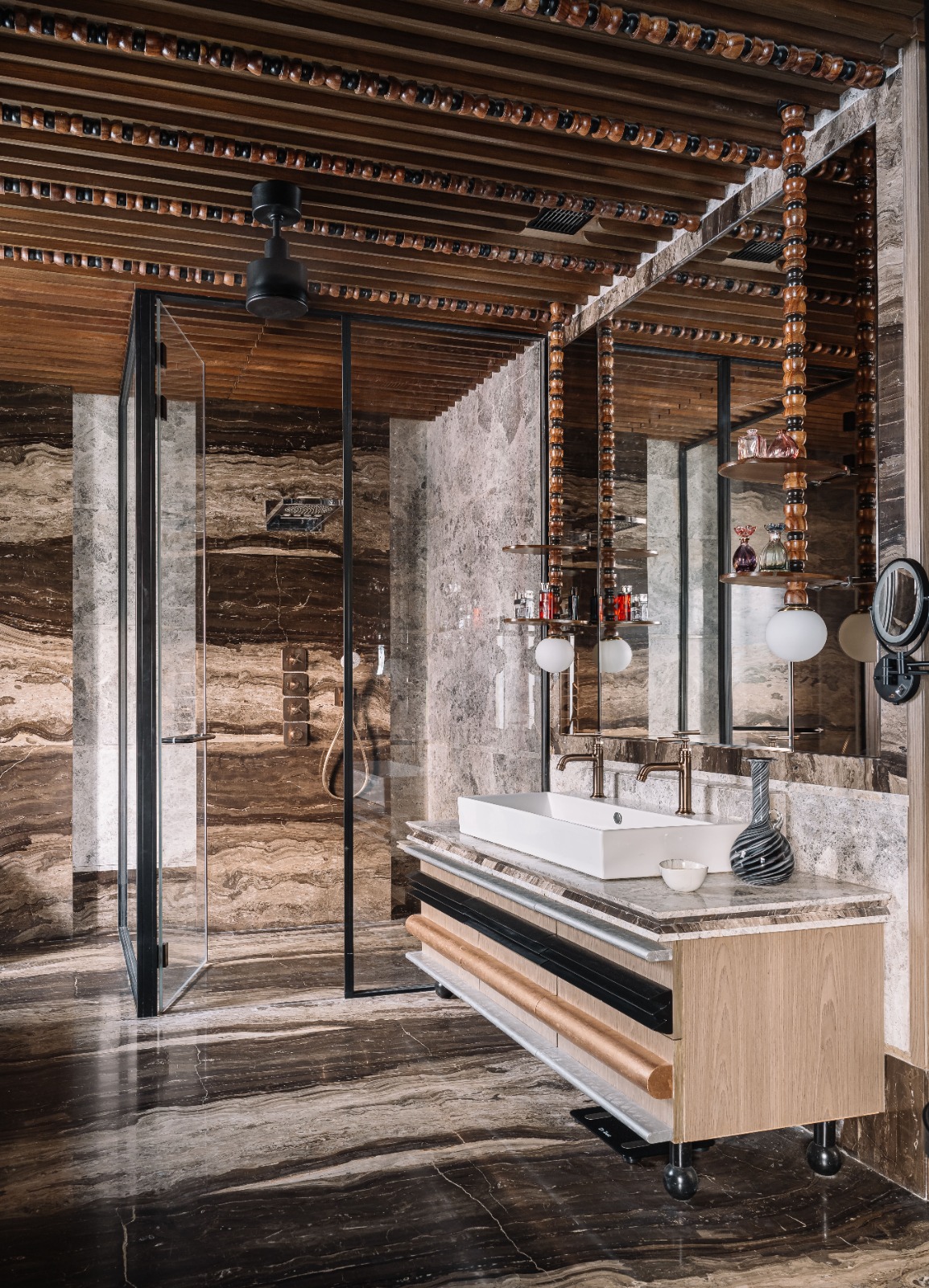
The way we live today has fundamentally changed and therefore the way people engage with their homes has changed significantly over the past few years. Homes today are expected to support work, rest, wellness, and recreation. As a result, people are investing far more thought into spaces that contribute to their daily wellbeing. Bathrooms have become one of the few truly private spaces within a home. People are hence looking at them as spaces to pause, decompress, and reconnect with themselves. Increased exposure to global hospitality design, luxury resorts, wellness retreats, and spa experiences has further influenced home owner expectations.

Here are is a look at some key bathroom trends in 2026
Lived in Vibe and Tactile Spaces
There is a strong shift towards natural materials, tactile surfaces, larger and more immersive formats with a greater emphasis on sensory experiences. There is a move toward material storytelling. People are becoming more interested in surfaces that feel lived-in and tactile rather than perfectly polished. Textured stone, handmade finishes, fluted details, antique elements, and lighting that creates shadow and softness instead of uniform brightness is in vogue. There is also a growing appetite for bathrooms that feel slightly unexpected. A powder room can now carry a dramatic colour palette, an unusual ceiling treatment, or a collectible object. These spaces are becoming more expressive because people are no longer afraid of giving smaller rooms a stronger identity.

Colours, Textures, Lighting
There is a move away from overly sterile bathrooms. The palettes today feel denser, earthier, and more atmospheric. Moss greens, tobacco browns, oxblood tones, stone greys, chalky neutrals, muted terracotta are some popular tones. Texture is playing a significant role as well, whether through fluted stone, ribbed glass, brushed metal finishes or tactile wall treatments that add depth without overwhelming the space. Diffused lighting, concealed glows, backlit mirrors, underlit counters, and shadow play create a much more intimate atmosphere. Lighting has become more layered and intentional. Rather than relying solely on functional illumination, designers are integrating concealed lighting, pendant fixtures and decorative wall lights to create mood and visual interest.

Fixtures and Fittings
There is growing interest in softer silhouettes and sculptural forms. Brushed brass, aged bronze, gunmetal, and textured black finishes feel warmer and more nuanced than highly reflective chrome. There is a rise in the popularity of integrated stone basins, monolithic counters, floating vanities, and mirrors with unusual geometries which are becoming increasingly popular. Another interesting shift is that fittings are becoming quieter visually. Technology and functionality are being hidden more intelligently. Slim drainage systems, recessed storage, concealed flush plates, and integrated lighting details allow the materials and spatial atmosphere to take precedence.

Technology
Technology is becoming more discreet and intuitive. Rather than being showcased, it is being integrated seamlessly into the user experience. Features such as sensor-based lighting, anti-fog mirrors, intelligent ventilation systems, touchless fittings, programmable water temperature controls, smart showers, and advanced toilet systems are becoming increasingly common in premium residences. Homeowners are particularly interested in technology that enhances comfort, hygiene, and convenience without visually overwhelming the space. The most successful smart bathrooms are often the ones where the technology remains almost invisible.

Click here and here for other design trend articles. To read more about luxury bathroom design trends, check my article in The Hindu Property Plus.

omg look at these,,,,,,these are all must be 7star hotels ,,,,,or some multi billionaire’s home
They are residences only…not hotels!!! Yes they look quite sophisticated:)