
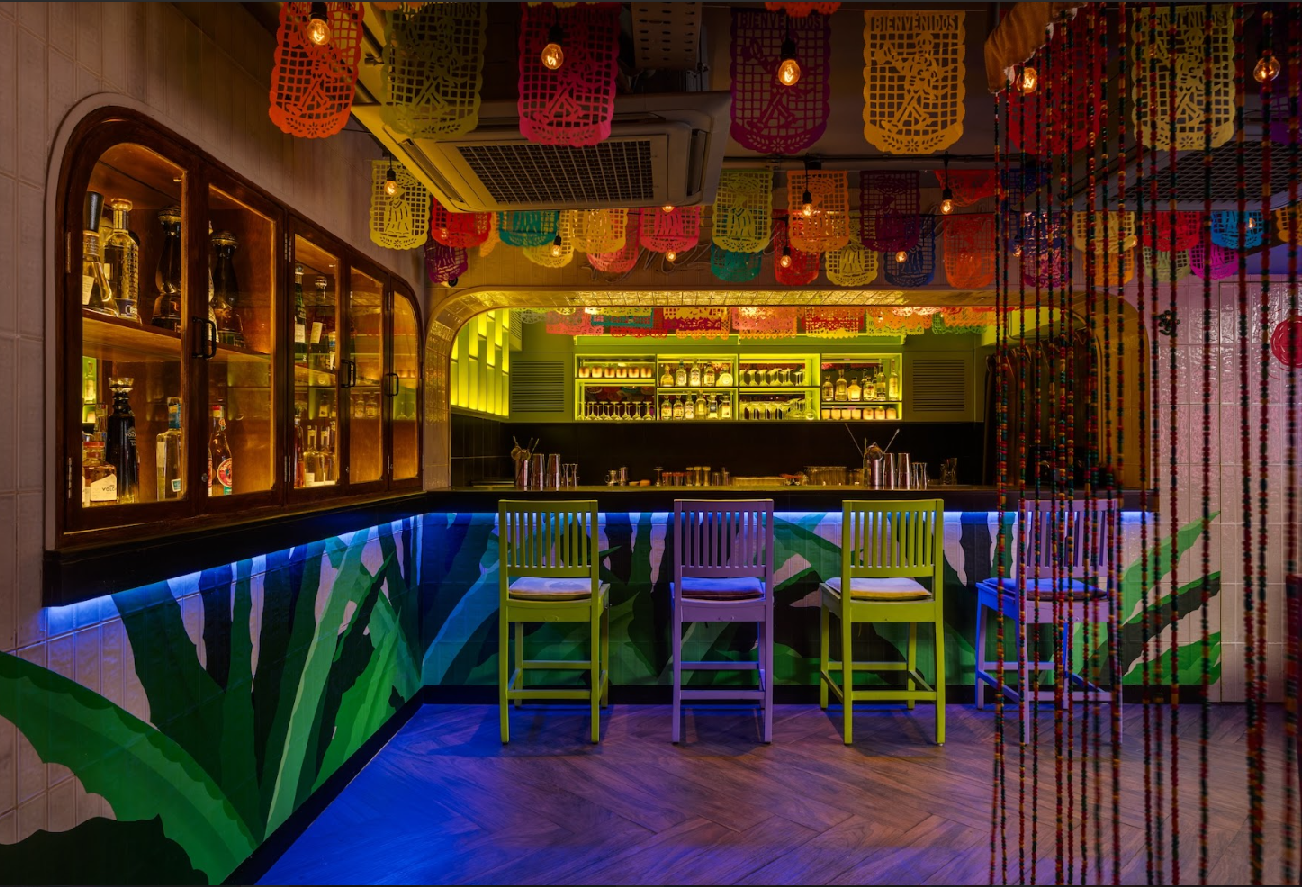
Designing a bar requires a careful balance between atmosphere, functionality, and spatial flow. Unlike other hospitality spaces, a bar must simultaneously operate as a place for social interaction, performance, and personal moments. So, what are some of the key factors to take into account while designing a bar?

Key considerations while designing a bar include guest circulation, zoning (public vs. semi-private areas), sightlines and bar ergonomics to ensure seamless service flow. Lighting design, both functional and atmospheric, play a critical role in shaping perception and dwell time. A well-planned layout ensures that movement remains fluid and intuitive even during peak hours.

The bar counter is almost the nerve centre of the space and is a place for just not serving drinks but also social interaction and conversation. Material selection and lighting are equally crucial in shaping the experience of the space. Since bars experience high footfall, materials chosen need to be a combination of aesthetics and durability.

Acoustic performance also plays a critical role, especially in bars that host musical performances. Materials, surfaces, and spatial planning must help manage sound levels so that music enhances the atmosphere without overwhelming conversation. Ultimately a successful bar design brings together these functional and sensory considerations to create a space where people feel comfortable lingering and returning.

Bar design in 2026 leans strongly towards immersive, narrative-led environments with a distinct point of view. The strongest trend is originality that is creating something fresh and still preserving a sense of timelessness. Bold and conceptual designs are certainly gaining traction. That said, spaces designed with old school charm and timeless materials such as brick, oxide finishes, and concrete will always remain relevant and never go out of style.

Deep and bold colours are used to craft warm, inviting environments. This is complemented by subdued and atmospheric lighting. Lighting plays a crucial role and is becoming increasingly cinematic, low, warm, and intentionally directional which is used to sculpt mood and highlight focal elements. Lighting design has also become more intentional and designers are moving away from evenly lit interiors and are instead using strategic pools of light that highlight specific elements while leaving other areas in shadow. This approach creates a more dramatic and intimate environment that enhances the overall experience of the space.

Bar counters and furniture are no longer passive; they are treated as sculptural, expressive centrepieces. Shared seating, communal benches and extended bar counters are in vouge as they encourage interaction among guests. Bars are also becoming venues for vinyl sessions, special performances and curated musical nights.

Overall, the emphasis is on creating emotionally resonant, highly memorable spaces that feel personal rather than generic. It is important to note that budget plays a very pivotal role early on as it influences the decisions around layout, materials, lighting, equipment, furniture and finishes. The objective is to create a social environment where architecture, music, and community come together in a seamless way.
To read more about Bar Design read my article in Hindu Property Plus. Click here and here for other design trend articles.
