
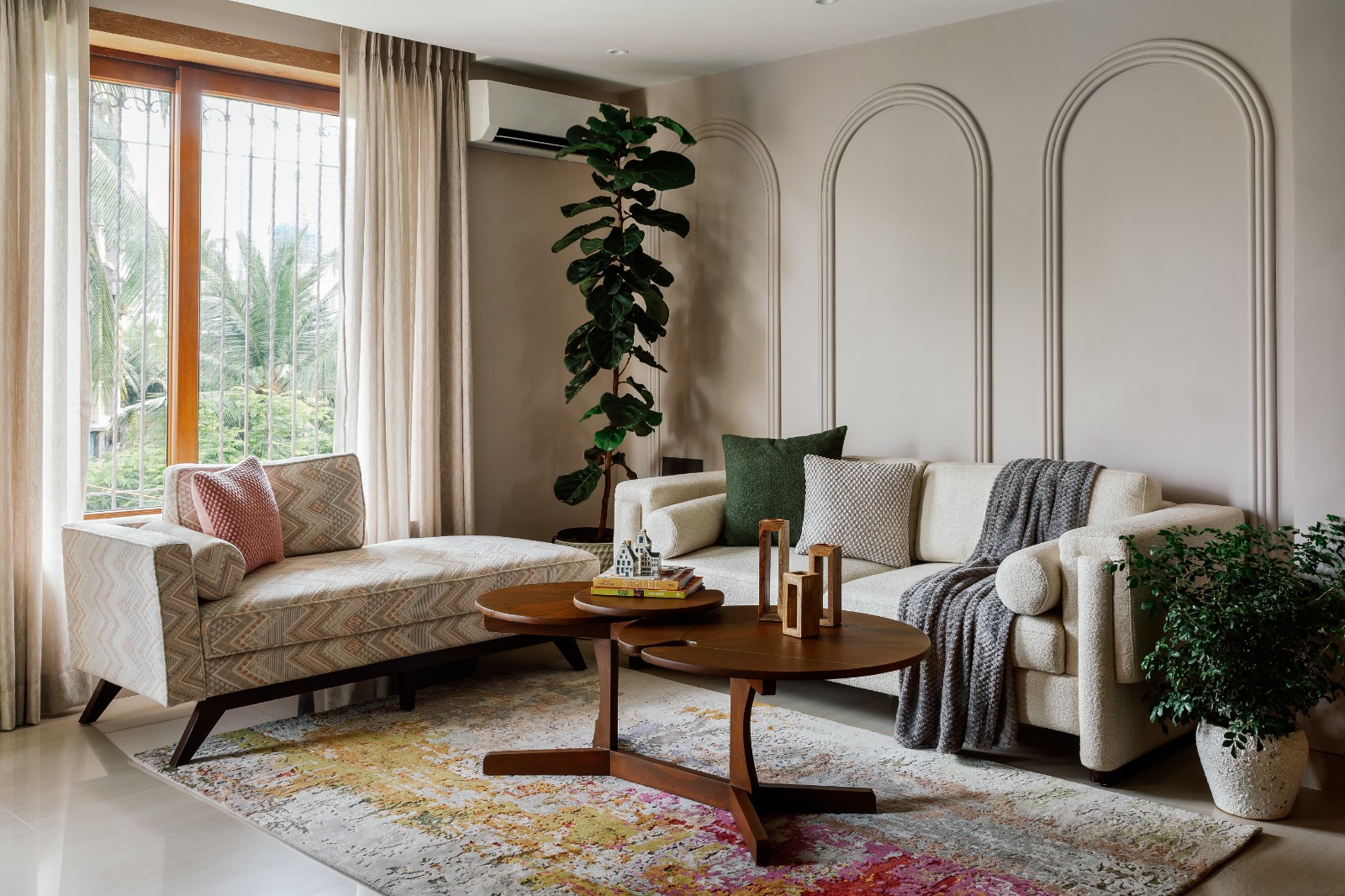
Designing urban homes come with a unique set of challenges, the foremost being the lack of space and the gradual erosion of green and open spaces within the dense fabric of our cities. As urbanization accelerates, architecture often tends to prioritize built form over natural context, leading to environments that feel disconnected from their ecological roots. Even though spaces maybe compact, it is important to integrate green elements as they are an essential component of healthy living. Integrating natural elements—light, air, greenery, water, and open sky—into designs creates homes that are not only environmentally responsive but also emotionally nurturing.

Key Considerations
When designing for urban spaces, the key considerations revolve around context, density, and human experience. First, it is essential to respond to the site and its surroundings—working within constraints of limited space, neighbouring structures, and local regulations while still creating a distinctive identity. Second, light, ventilation, and privacy become critical, as urban homes are often tightly packed. Third, sustainability must be at the core of design. Integrating green spaces, energy-efficient systems, and natural elements helps balance urban density with ecological well-being. Finally, the user experience is paramount as the home needs to balance both form and function. It should be a space where aesthetics and practicality blend seamlessly.

Maximizing space
Maximizing space in compact urban homes requires a balance of smart planning, structural ingenuity, and thoughtful design interventions. When the footprint is limited, building upwards becomes critical. Double- or triple-height volumes, skylights, and vertical connections help open up interiors, making compact homes feel expansive.

Cross ventilation and careful placement of openings are essential in dense urban fabrics. Multifunctional furniture, built-in storage, and movable partitions help optimize space without clutter. Furniture should serve more than one purpose—for example, a study table that folds into the wall or storage integrated under seating.

Bringing Green Indoors
When outdoor space is restricted, greenery can be integrated indoors through indoor plants, balcony gardens, or even wall treatments. The design embraces a sustainable approach, using passive cooling and natural ventilation to regulate interior temperatures—proving that comfort does not always need to rely on machines. Geen terraces, vertical gardens, and sensitive spatial planning allows natural systems to permeate the built environment.

Dos

- Maximize natural light and ventilation – design openings, skylights, and cross-ventilation to enhance comfort.
- Use multifunctional furniture – compact, built-in, or foldable pieces to save space in urban homes.
- Incorporate greenery – through balconies, courtyards, vertical gardens, or even indoor planters.
- Opt for a neutral base palette – then layer textures, natural materials like bamboo, and accents for warmth.
- Prioritize sustainability – use locally sourced materials, sustainable furnishings, passive cooling, and energy-efficient systems.
Don’ts
- Avoid over-cluttering – too many elements can make compact homes feel smaller.
- Don’t block natural airflow or light with heavy partitions or oversized furniture.
- Avoid excessive ornamentation – simplicity often creates a more timeless aesthetic.
- Don’t ignore scale – furniture and finishes must be proportionate to the space.
Styling Tips

- Use mirrors and reflective surfaces to create an illusion of openness.
- Introduce accent lighting to highlight design features and add warmth.
- Layer natural textures like wood, stone, cane, or linen to soften interiors.
- Add personalized art or handcrafted elements to make spaces unique yet uncluttered.
Read more about this topic in my article in The Hindu Property Plus.
